WELCOME!!!!!

วันจันทร์ที่ 6 กันยายน พ.ศ. 2553

Pele Sports 1970 Review


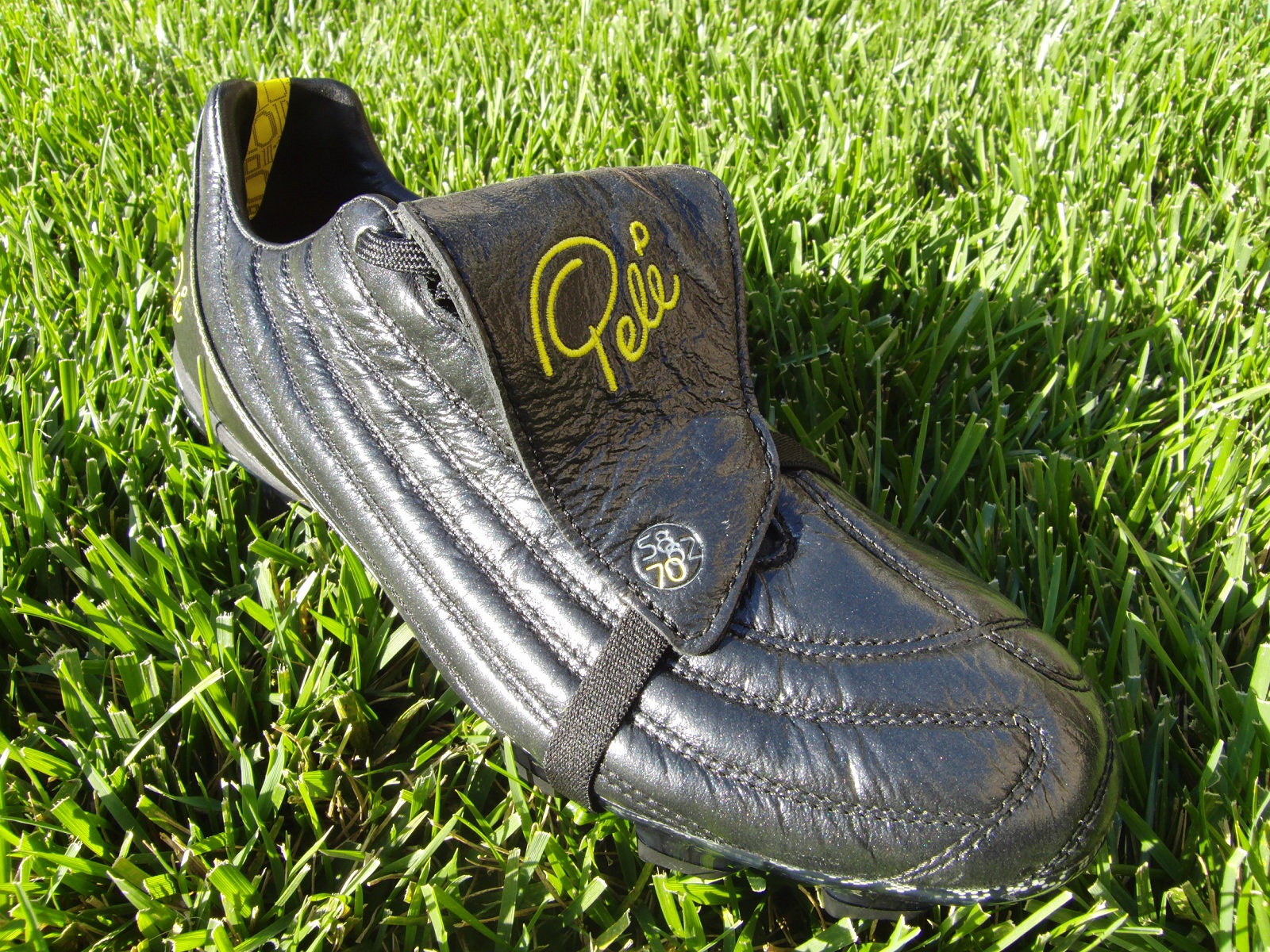
Right before the World Cup started this summer in South Africa we got a first glimpse at the new Pele Sports range. I have to admit, when I first heard about the release I was pretty excited knowing that a boot was going to be designed through the inspiration of one of the best players to ever have graced a pitch. Pele Sports have placed a large emphasis on delivering top quality cleats for use by anyone, regardless of circumstance. This means establishing value at different price points and including features not usually found in competitive boots. Top of the Pele Sports list is the 1970, which I have had the chance to test out over the past few weeks! For testing, I wore a size 9US in theBlack/Yellow colorway.
Whats with the leather?The first thing you will notice about the 1970 is the incredibly shiny leather upper. I have spent a lot of timing marveling at how it actually looks and feels! The entire upper of the 1970′s is a one-piece kangaroo leather, one-piece in order to minimize seams. The leather undergoes an incredible 150 separate processing steps, some of which include:
  • Hi-tech polymer treatments provide permanent water resistance, yet preserve breathability.
  • A permanent branding process prevents fading and keeps the K-leather color-fast.
  • A secondary tanning process protects against sweat damage.
  • A friction enhancing treatment is impregnated in the fiber structure of the leather.  This means it won’t wear off, like a coating treatment.
Fit and Size
One important thing to note is the size. Length wise, I could have done with a half size smaller. My advice is to order down a half size, so if you are a size 9US go with a size 8.5US. They also have plenty of room for those of you with wide feet!
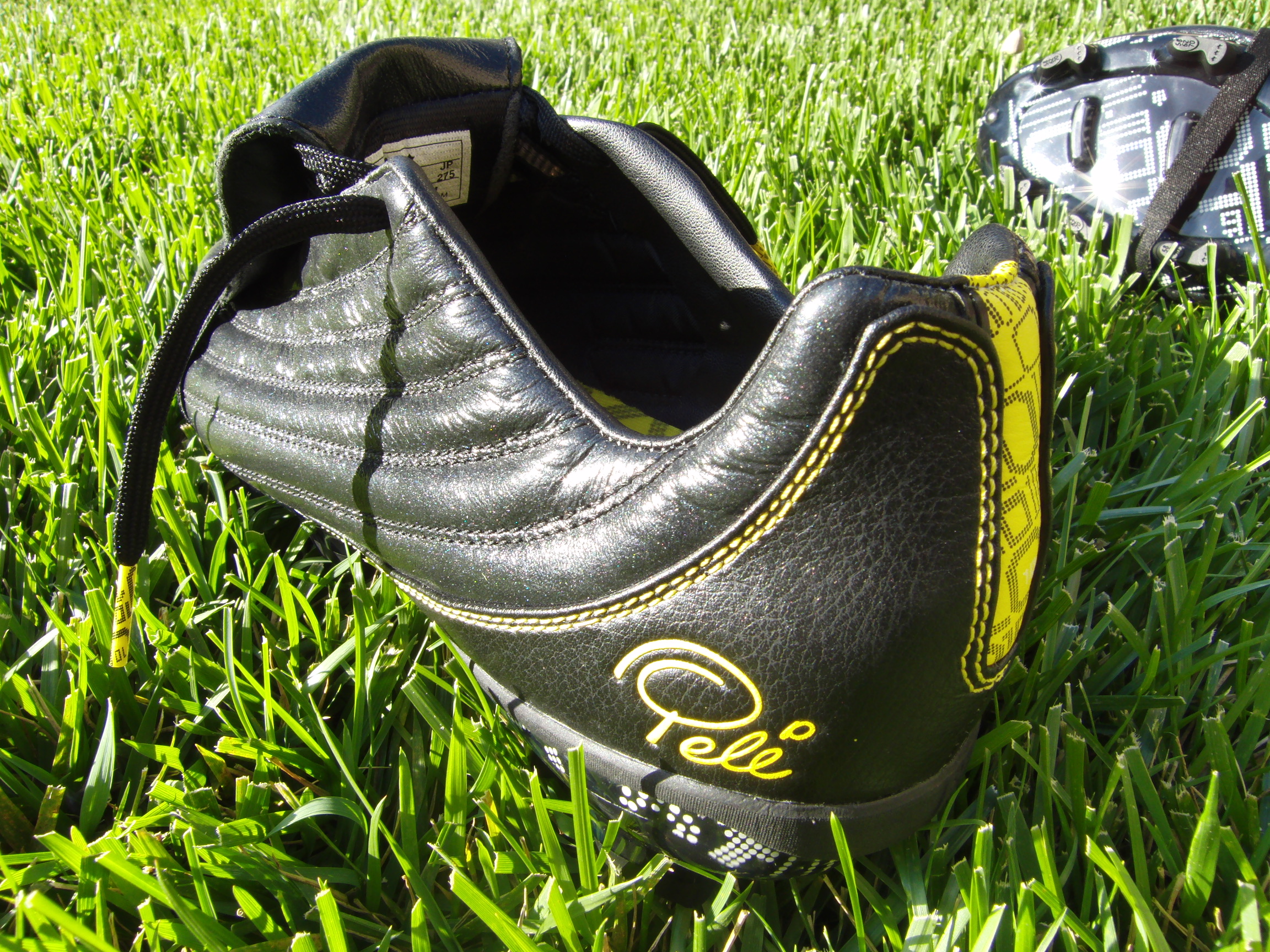
Pele Sports 1970 Heel
Breaking InBreaking the Pele Sports 1970 in was a breeze. I wore them for 2 training sessions before getting them into a game. I encountered no blisters and no discomfort, although at times the soleplate felt a little sluggish. I spent 5 minutes bending the sole of each boot in order to loosen them up and this did the trick. In the second or third game, when the cleats felt like they had fully molded to my feet, I started to notice that while running, contact with the ground felt very smooth, almost like the boot is designed with impact absorption in mind.
Comfort and PerformanceThese are a super comfy boot full-stop. Pele Sports have invested plenty of time ensuring that the design incorporates a high level of quality padding to keep your feet safe. The insert in particular offers great protection and is pretty thick compared to other brands. The actual boot has plenty of padding that feels good surrounding your feet. The dual-density compression molded midsole absorbs shock and keeps the foot more comfortable and I found this to be effective. While wearing in games I never felt the need to take them off – very important for players who play on a regular basis. In terms of performance, I felt like the 1970 played its role, but at times I wanted a little more from them.
Weight
With a high level of comfort comes weight, and I felt like that held me back at times, although this is something that Pele Sports are aware of. The boot weighs in at 11.7oz. When I asked the company about this they stated that “While we find the new superlight boots very interesting from a design perspective, we wonder about their utility for a true all-around player.  By our definition, every player should be prepared to track back on defense, make hard challenge when necessary and play aggressively for 90 minutes.  To do so requires great fit, support and comfort.”
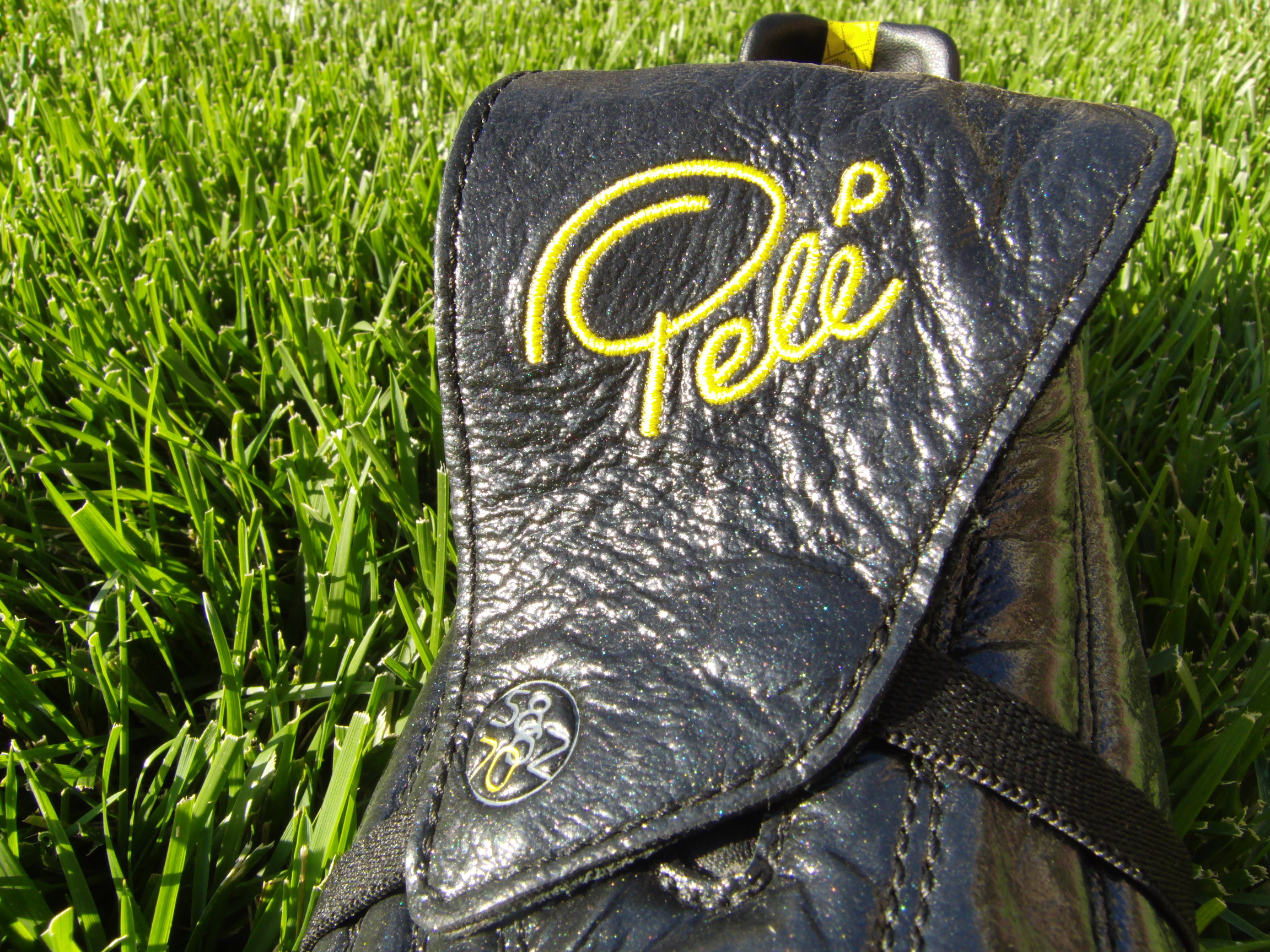
Pele Sports 1970 Tongue Pele Sports K-Leather
TechnologyI can’t get past the leather on these boots, it is something absolutely unique to the market and I love it! Trust me when I say that if you get your hands on a pair, you will spend time holding them to get a taste for the feel! While testing, the area around the strike zone lost some of its gleam, but the K-Leather itself worked out fantastically and really molded to my foot. Another development is that Pele Sports have ramped up the midsole by 5mm in the heel area for improved Achilles tendon support.
NegativesI think my main negative was addressed by the Pele Sports team, and that was the weight issue. But, it is clear that these boots have been designed with comfort and an increased level of protection in mind. They ended up breaking in really well, but I did feel a little sluggish in them at times. Again, I simply had to work on loosening up the soleplate to resolve this issue. The final thing that irked my was the tongue that I never felt at times got in the way a little. I had a similar problem while testing the Diadora Kobra K, where I actually didn’t know where to place the strap underneath the boot.
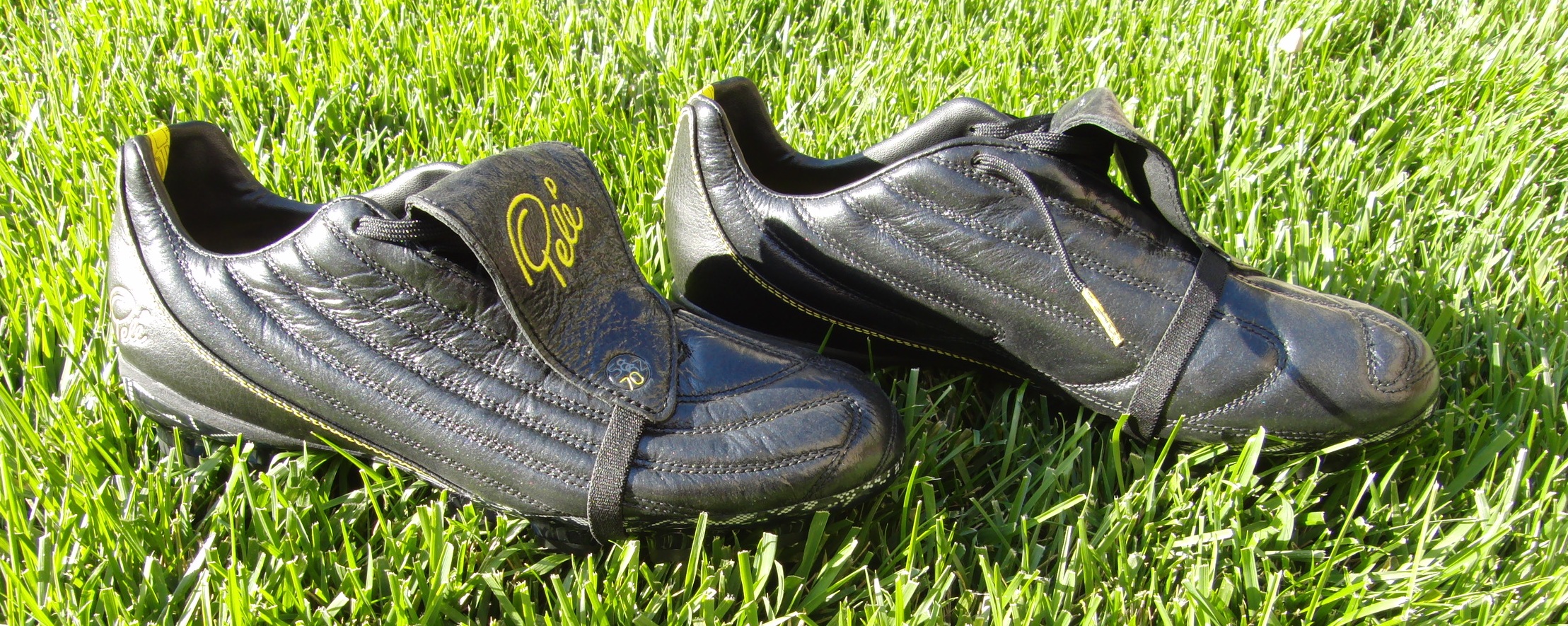
Pele Sports Soccer Cleats
SummaryI have a feeling we are going to hear a lot more about Pele Sports in the near future. They have created something completely unique for the market, which they needed to do in order to make an impact. And the fact that their top line boot is priced at a reasonable $160 also helps (although I do realize that this is still a lot of money!) In terms of positions, these cleats are pretty versatile. They offer a great deal of comfort and protection, so they are more than suitable for defenders. They are also a good option for strong strikers who need good touch and a boot that will aid in shot power. Overall, I would highly recommend checking out a pair if you get an opportunity.

Puma V1.10 SL Review


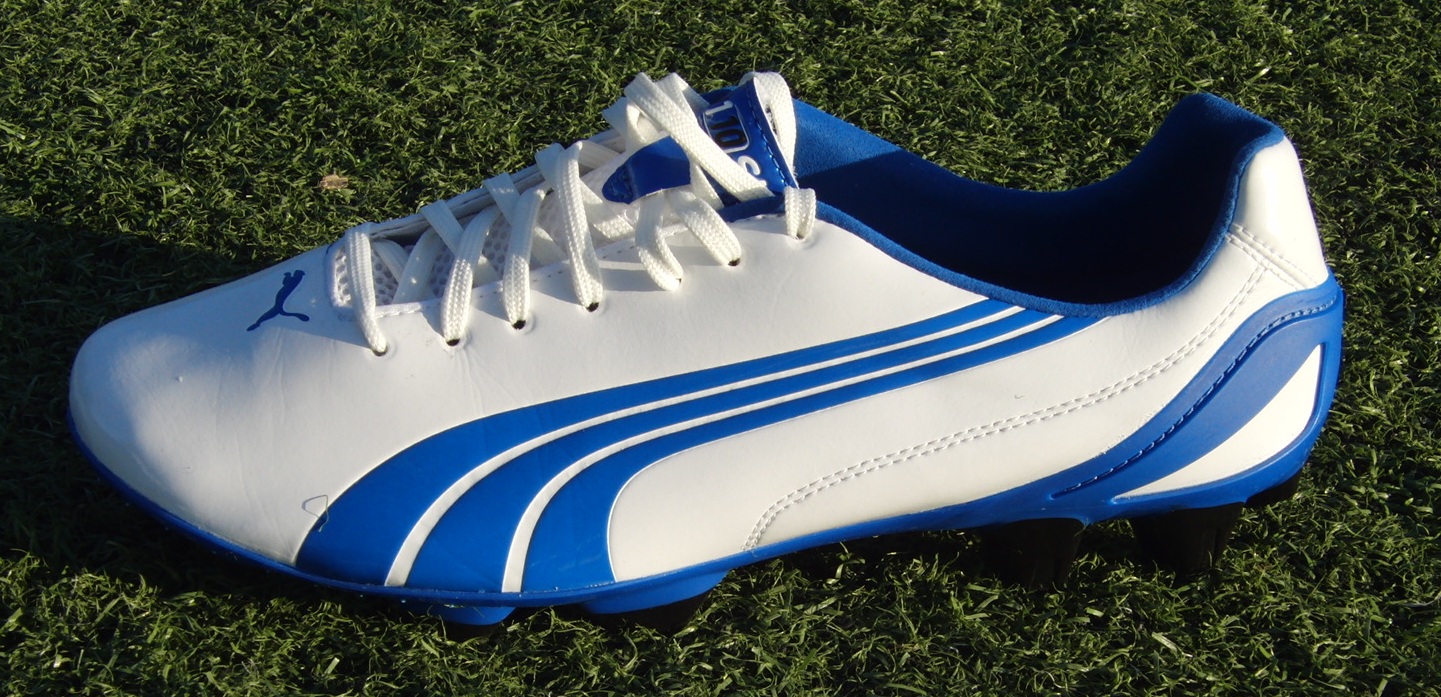
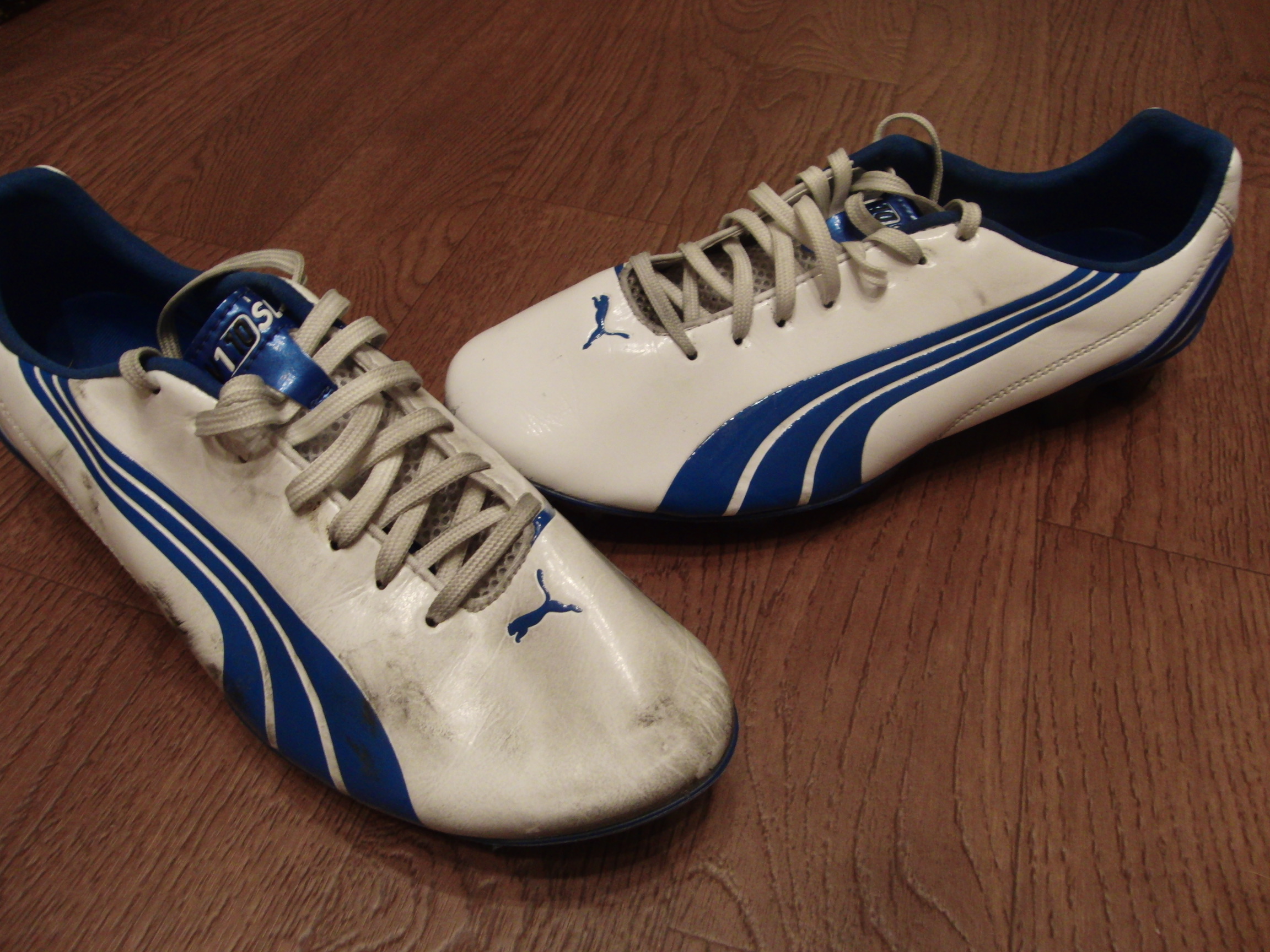
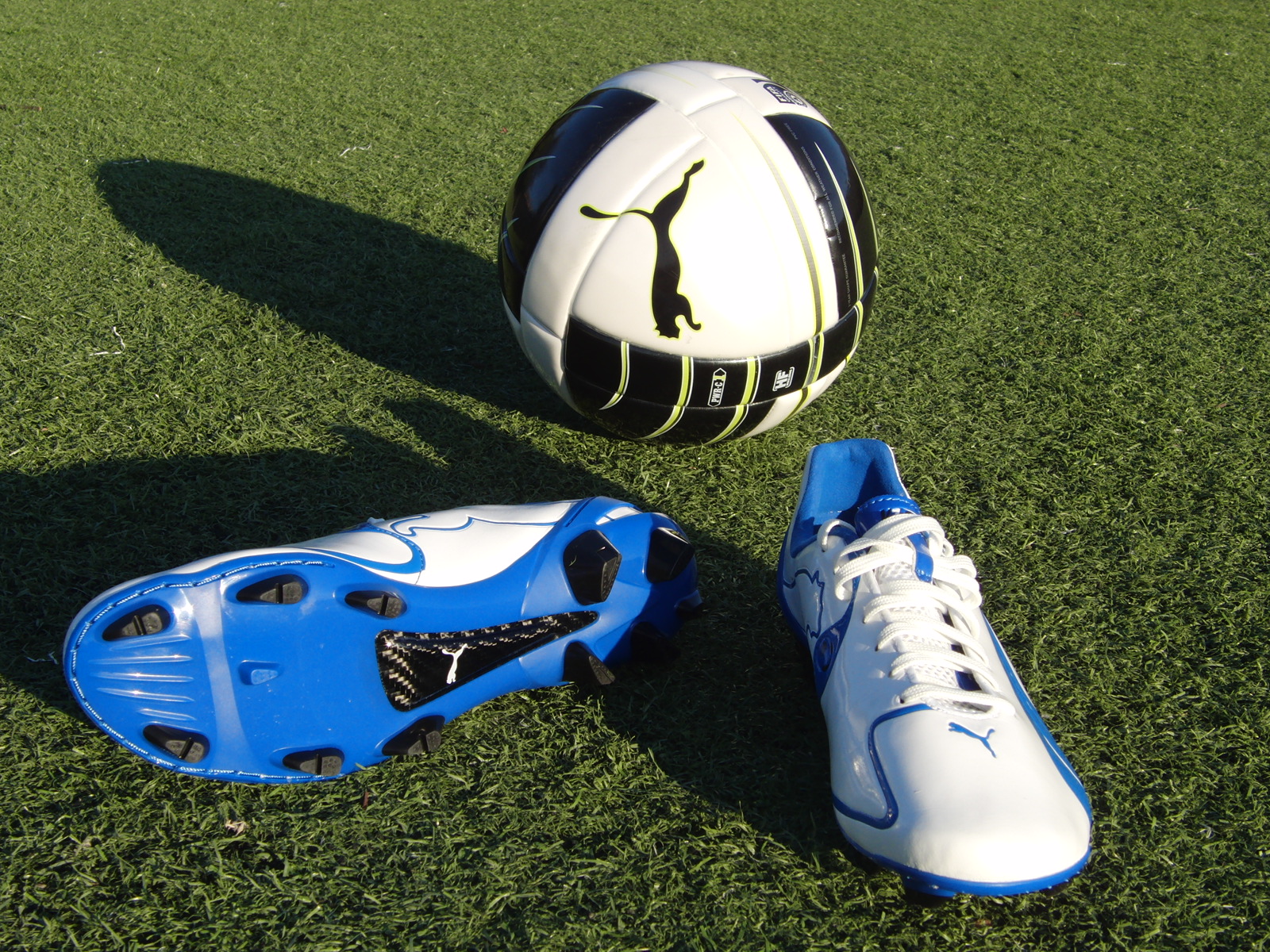
There is no doubting that the Puma V1.10 SL is built around speed! Weighing in at 5.3oz, it is currently the lightest soccer cleat to be released on the market and unbelievably light when you pick them up. But there are several other keys areas that need to be addressed if you are contemplating purchasing a pair, like comfort and performance for example. Another key issue is sizing, and I was lucky enough to be able to try on two different sizes in order to find the right pair. I went with a size 10US for testing in the White/Blue colorway.
Sizing
Since their release, one of the key questions about the V1.10 SL has been centered around their sizing, with many people unsure of what size to get. The team at soccer.com strongly recommend ordering a full size up. I normally wear a size 9US, so decided it only made sense to get a size 9.5 and 10. Both fit pretty well, but it was quiet evident that the 10 was a better option. They fit pretty tight and a little narrow at the toe area.
My advice: Make sure to order a full size up.
Puma Cleats and ball
Breaking In
Just like with the Adidas adiZero, I was extremely shocked at how easy these boots were to break in. Being lightweight, I expected there to be an adjustment period but after one training session they were game ready. The microfiber upper is extremely flexible and feels broken in from the very start. I didn’t encounter any blister or cramping issues, so my experience breaking them in was positive.
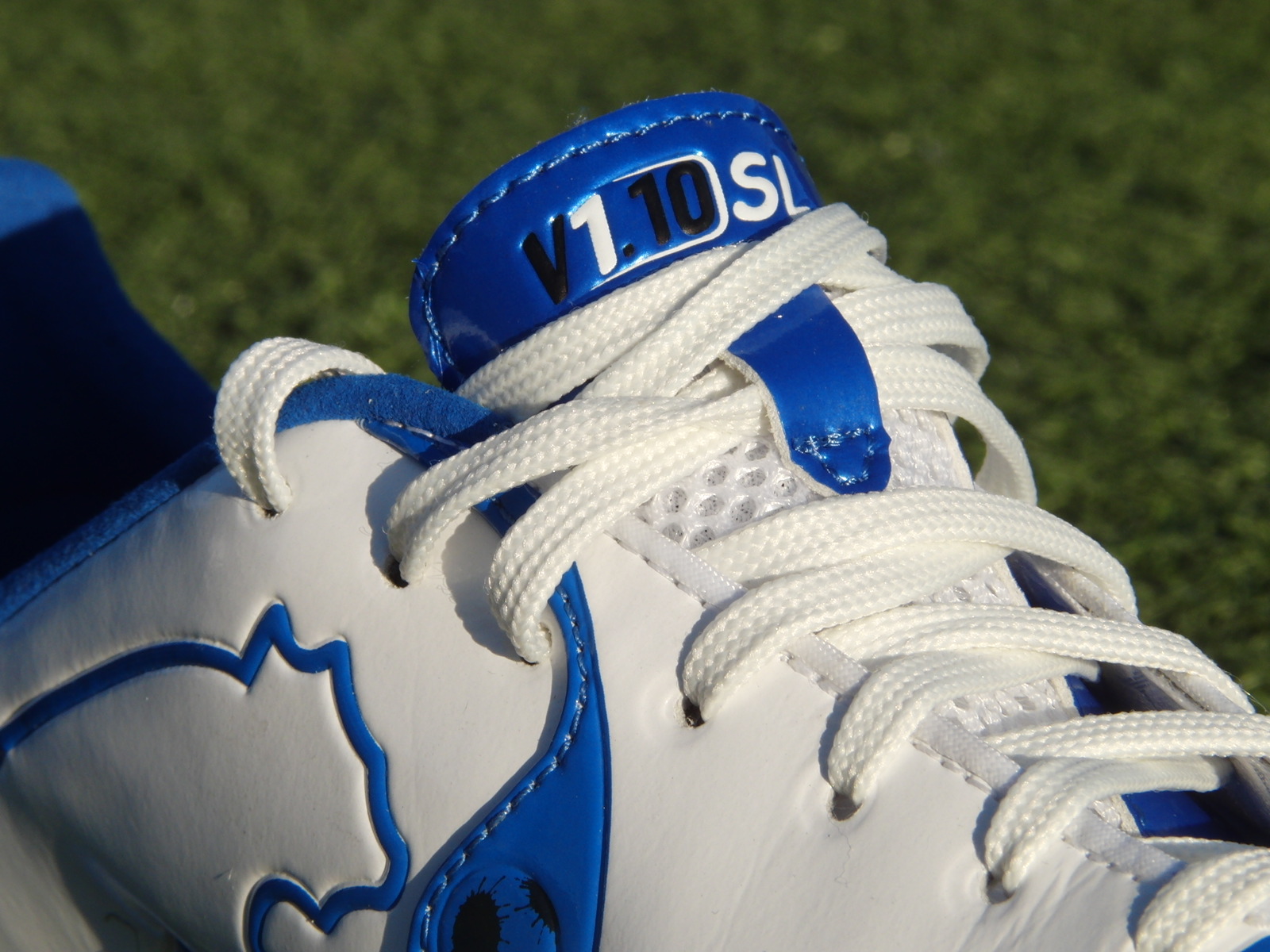
TechnologyIn order to create a boot that weighs an incredible 5.3oz, you need to make some technological adjustments.  Well, Puma have cut down the weight by using supersoft and ultra thin premium microfiber upper and one piece of pebax with a carbon fiber inset to minimize weight and increase stability. Another area where they have reduced weight is in the tongue, which is super thin (almost too thin in my opinion.)
Puma V1.10 SL Tongue Puma V1.10 SL soccer cleat
Touch and ControlThis is where I felt the V1.10 SL excelled. Since these are designed for speed players, touch and control are going to be the more important attributes needed. And Puma have not disappointed. The upper, although thin, gives great feel on the ball. It also has a slight grip feel that I noticed helped with touch. I have to admit, these are probably one of my favorite boots for dribbling in. When it comes to shooting, the V1.10 SL is not going to help in regards to shot power. But, if you are controlling the ball the way you want to, then opportunities are going to be created through your play. So, I feel they have benefit in terms of helping you get into better positions for better shots.
V1.10 SL
Negatives
Protection. For some players, specifically defenders, protection is a big issue. My opinion is that the V1.10 SL offers the least protection of any boot on the market, particularly around the tongue region. This is something that is pretty much expected from a lightweight boot. If you are a defender, or someone who tackles a lot I would advise looking elsewhere. The second issue with the white/blue design is that they scuff really easily. The microfiber upper can look very damaged after playing. You will need to clean your boots after playing to keep them in top shape. So, for example, here is a before and after picture that shows they can be cleaned really well after playing.
SummaryI am a huge fan of the V1.10 SL and would definitely recommend them to players who are looking for a speed boot. I am still a little baffled at how companies are producing these super lightweight boots, but they are managing to do a good job at releasing quality boots. These break in really easily and are probably one of the best boots on the market for real touch and control. They are more suited to wingers and fast forwards than any other position. Watch out for more releases in the range over the coming weeks like the V1.10 SL Lightning!

Second Big Time Post( Umbro Sleath Review)


The release of the Umbro Stealth Prohas had one of the most bizarre advertising campaigns in recent memory! “Are you Fox or Chicken?”reads the headline, followed by guys running a round a field in masks with feathers flying about the place. Strange, odd, confusing. But, once you get past this and actually try out a pair things become a little more predictable. With the World Cup just around the corner, Umbro have stepped up their range of releases in order to compete with the rest of the market. Players like John Terry, Deco and possibly Darren Bent will be on hand to dazzle in them. For testing, I wore a size 9US in the hard ground White/Red/Silver color and got in 5 games and 2 training sessions (more games than training the past 3 weeks!)
Breaking In
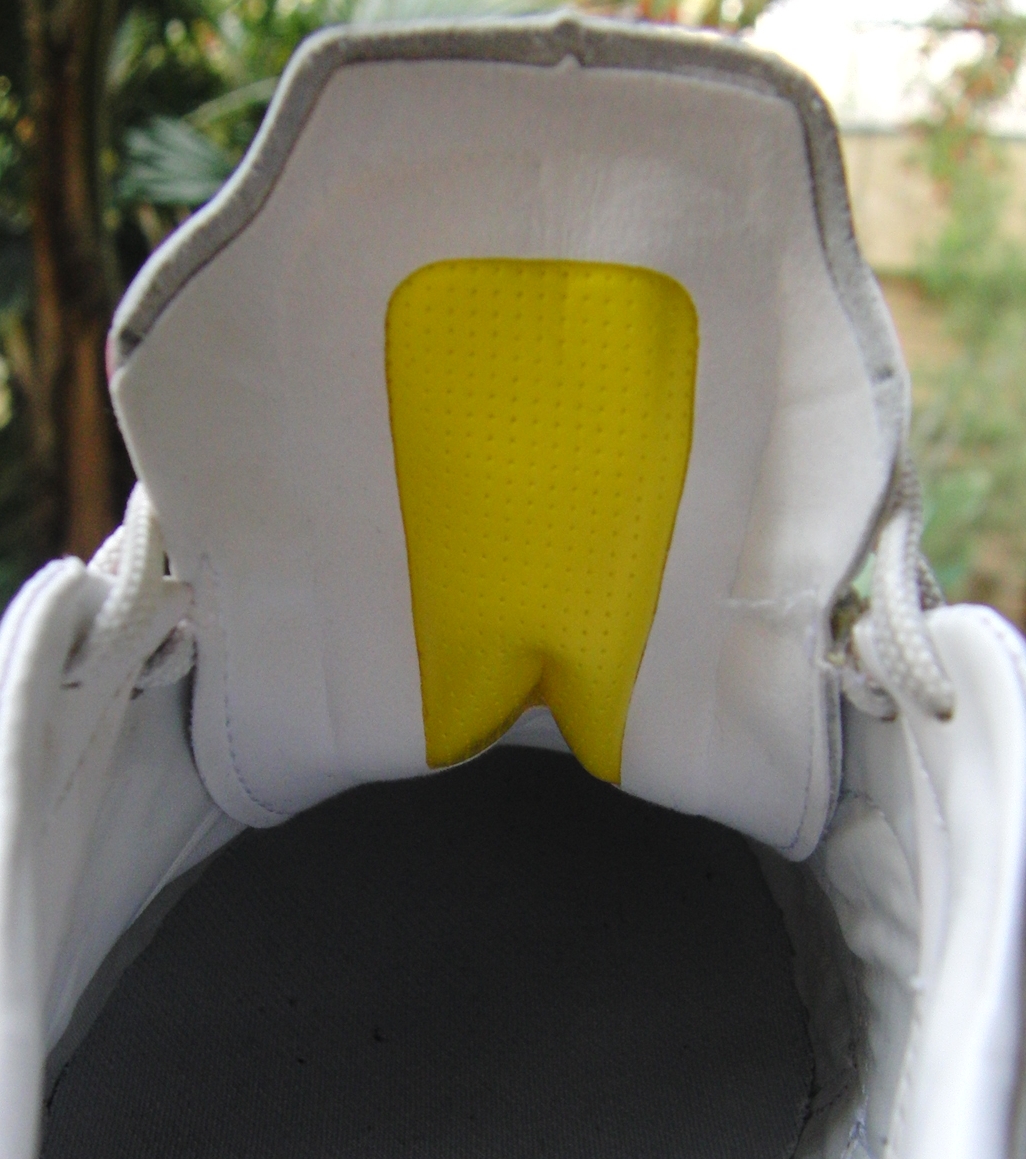
No complaints on this one! I took these out of the box and into the first game without any problems (*I don’t recommend that you try this, over time I have developed a sense of what will work well from day 1.) My advice to you is simply wear these for one training session and they will be ready for game time. I didn’t encounter any blisters or any discomfort for the duration of testing. The Stealth fits absolutely true to size and they really mold to the shape of your feet quickly. Umbro use a grip type material just inside the cleat that surrounds the heel area. Because it has a grip texture feel to it, the boot moves in sync with your foot. Another cool feature that helps is the padded tongue that Umbro have included. If you lift the tongue area, there is a yellow mesh strip that runs along the forefront of your foot. Again, this area feels like it aids in keeping your boot in place, while also adding a little extra comfort when striking the ball. Umbro also use a high performance Poron insert that adds increased amount of shock absorption.
Umbro-Stealth-Pro close upStyle and Performance
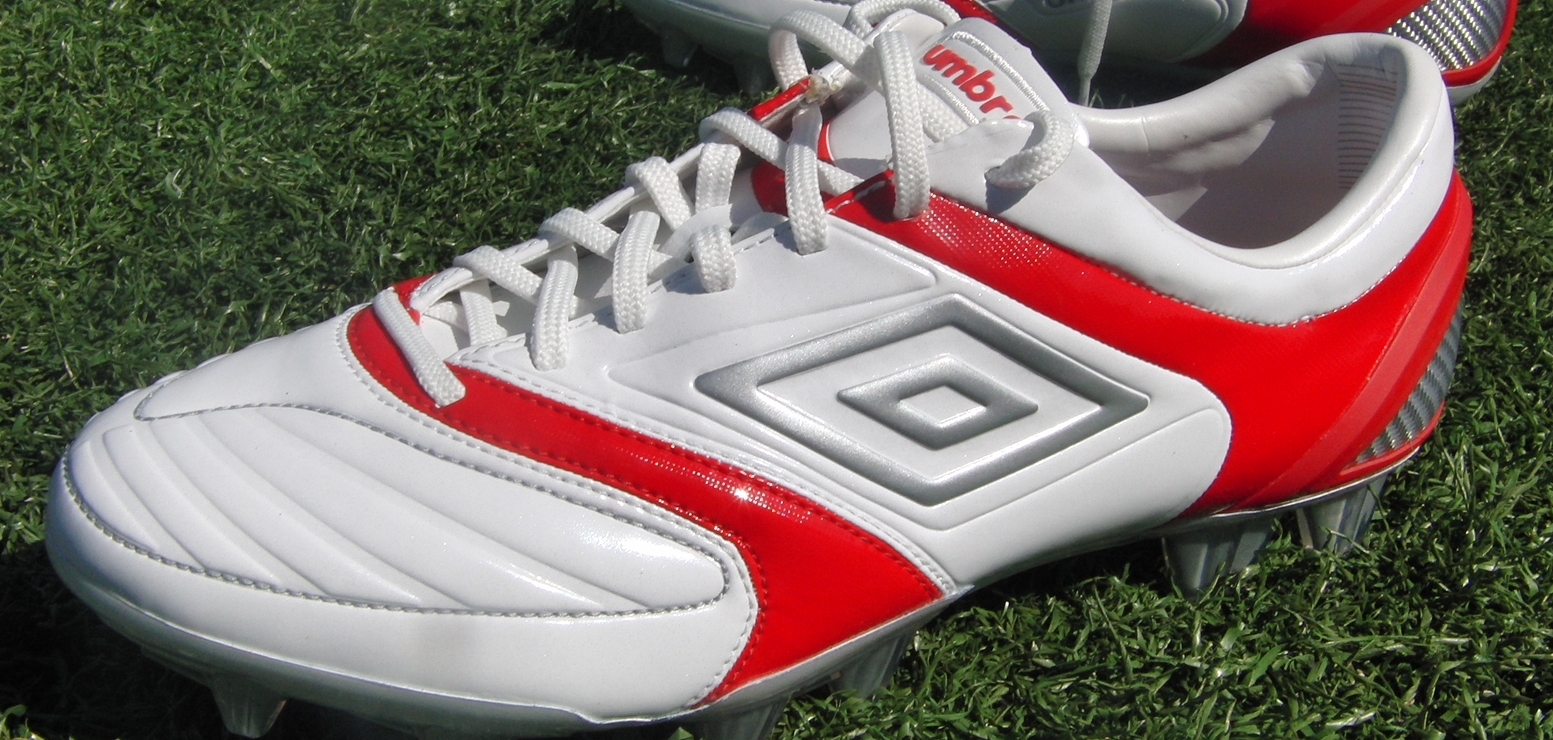
The initial releases in the Umbro Stealth range are very unique. Both versions have a focal color with a second color running in two separate lines across the cleat. I tested the White version, which has  red lines running through it (the Red version has blue running through it.) I have to admit that I am a fan of both designs. They are not overly flashy, yet they offer something unique that is not present in any other releases on the market. Admittedly, I was glad to get the White version as I prefer it over the red.  In terms of performance, there are n0t many better cleats currently on the market! Throughout wearing the Stealth, I felt comfortable and well protected. Along the upper front of the boot there is a riveted area, almost like Umbro have created a series of ridges. This also falls along the strike zone, and whether intentional or not it creates an extra element of power when you strike the ball (or that is how it felt to me.) You can clearly see the area in the images of the boot.
Umbro Stealth TongueUmbro Stealth pro Soleplate
Technology
Rather than spending time trying to create new elements to add, Umbro have worked on improving what they know works! The boot is built around tradition and success. These are created using a soft, lightweight Teijin Japanese microfiber that allows for a shiny looking finish. I am more of a fan of leather, but there is nothing wrong with this material and it almost adds a new dimension to the design since it is shiny to look at! One key advancement on these is the stud design. Umbro have added two additional lateral studs that act just like running spikes to give extra grip when you take-off, with the purpose of improving acceleration. These two studs are located on the forefront of the sole, in the middle of the cleat. Do they work? I felt like I could push off faster on my first step so I would say they do serve a purpose.
NegativesThe one problem I have with these is how easily they scuff. After only one or two wears the scuffs are quiet evident. I took some time after wearing them to clean them off, and this is key if you want to give them extended life. I don’t really have any other negatives to report. Umbro have really done a great job in creating the stealth and I enjoyed the fit, comfort and performance of the boot without it causing any problems.
SummaryThe Umbro stealth really doesn’t fit into one of the Speed, Power or Control categories. It is more of an “all of the above” type cleat. Weight wise, they are a decent 9.8oz, not the lightest on the market but anything below the 10oz mark is decent. The ridges on the front of the cleat add a slight element of power, but not enough to place them in the category. After testing, these will be one of my go to cleats over the next few weeks as I know they offer comfort and I can rely on them to perform well. If you are looking for an all around effective cleat, without having to pay a large fee, then I highly recommend checking out the Umbro Stealth.

So sorry/T90 Laser Elite Review

I'm so so so sorry I haven't post a thing since last last sunday so I'm gonna post 3 big post (just review of boots) so here's the first....  

  The Nike Total 90 Laser III is a cleat that is designed with specialized details, tailored towards a specific category of soccer player. Earlier this year we reviewed the T90 Laser III with decent results and were excited to be able to get or hands on a pair of Elites. I know the title reads “review”, but the real purpose of this article is to give you a direct comparison of what to expect from the Elites compared to the Regular T90 Laser III.
For testing, I wore a size 9US in the Challenge Red colorway. I recommend checking out the comprehensive review of the regular T90 Laser III before reading over the head-to-head comparison below.
Breaking In
I actually found the Elites were easier to break in than the Regulars. They felt pretty comfortable from the beginning and I was confident running in them. The only area that I had some concern was with the soleplate. It seemed a little stiff but this was something I expected after testing the Superfly’s, which also have the carbon fiber soleplate. On the Regulars, I encountered some discomfort on my little toe, that seemed to rub against an inside seam. In the Elites this was not as much of an issue as the area feels like it has more padding. One negative, I did suffer some slight discomfort with the Elites along my right instep and ended up wearing some band-aids there. The insert in the boot seems to ridge down from center to the heel, and it didn’t suit my fit. In hindsight a few additional training sessions could have confirmed this without me taking them into a game situation.  


Soleplate
This is where the biggest difference lies in design. Nike have chosen a Carbon Fiber insert for the Elite range, helping to reduce the weight of the boot substantially. You can definitely tell there is a huge difference between both boots. I found the Elites to feel more rigid to begin, but over time as the soleplate adjusted to the flexibility needed while running they started to feel a lot more fitting. Nike have also injected the studs into the soleplate to make a cleaner surface area. On the regulars, the stud design is more rounded.
Heel Counter
Nike have removed the external heel counter on the Elites to reduce weight. This gives the boot a completely different look but it also gives the regulars an additional safety edge over the Elites. I am surprised by Nike’s decision to remove it as it is definitely an area players need protection, but it seems there was more of an emphasis placed on creating a lightweight boot. 
Weight
The Elites weight in at 8.2oz, while the Regulars weigh in at around 10.4oz, so there is an evident difference when you wear them.
MaterialsFrom the upper to the insole used, both boots use very similar materials throughout (bar the soleplate.) The one major difference I found was that both boots have very different stitching patterns. This is mainly seen around the outer sides of the boot as well as around the heel counter, or no heel counter as it may be for the Elites. I also noticed that the Elites have an additional layer of visible stitching on the insole that attaches the upper to the sole (both boots are also cemented.)
Comfort and FitBoth offer a great deal of comfort. I found that over time they mold nicely to your feet and are great for striking a clean ball. Ensuring you make the most of the 5 pods that line the strike zone is key, as it absorbs impact and if you catch it cleanly it feels great. In terms of fit, they are definitely very different to the T90 Laser II. The primary difference is that this version has off centered lacing, that angles the shape of the boot slightly inward. The fit is a decent option for someone with a wide fit. I am a little wary to say they are a great option because of the outer region of the upper that could potentially cause some discomfort on your little toe. Finally, I recommend you order them true to size. I wore a size 9, my true size, and they fit extremely well.
SummaryOne of the determining factors for deciding between the Regular T90 Laser III and the Elites will be price! The Elites are priced around $100 more than the regular version. Are they worth the money? That is for you to decide. Personally, I wouldn’t want to pay an extra $100. But, if you want the “complete package” you will need to fork out a little extra. Nike have put in a lot of work to create a more focused boot that gives you additional power with the bonus of lightweight – something no other boot on the market can currently offer. Ultimately, you need to weigh up the good and bad before making that final decision!